













Selections:
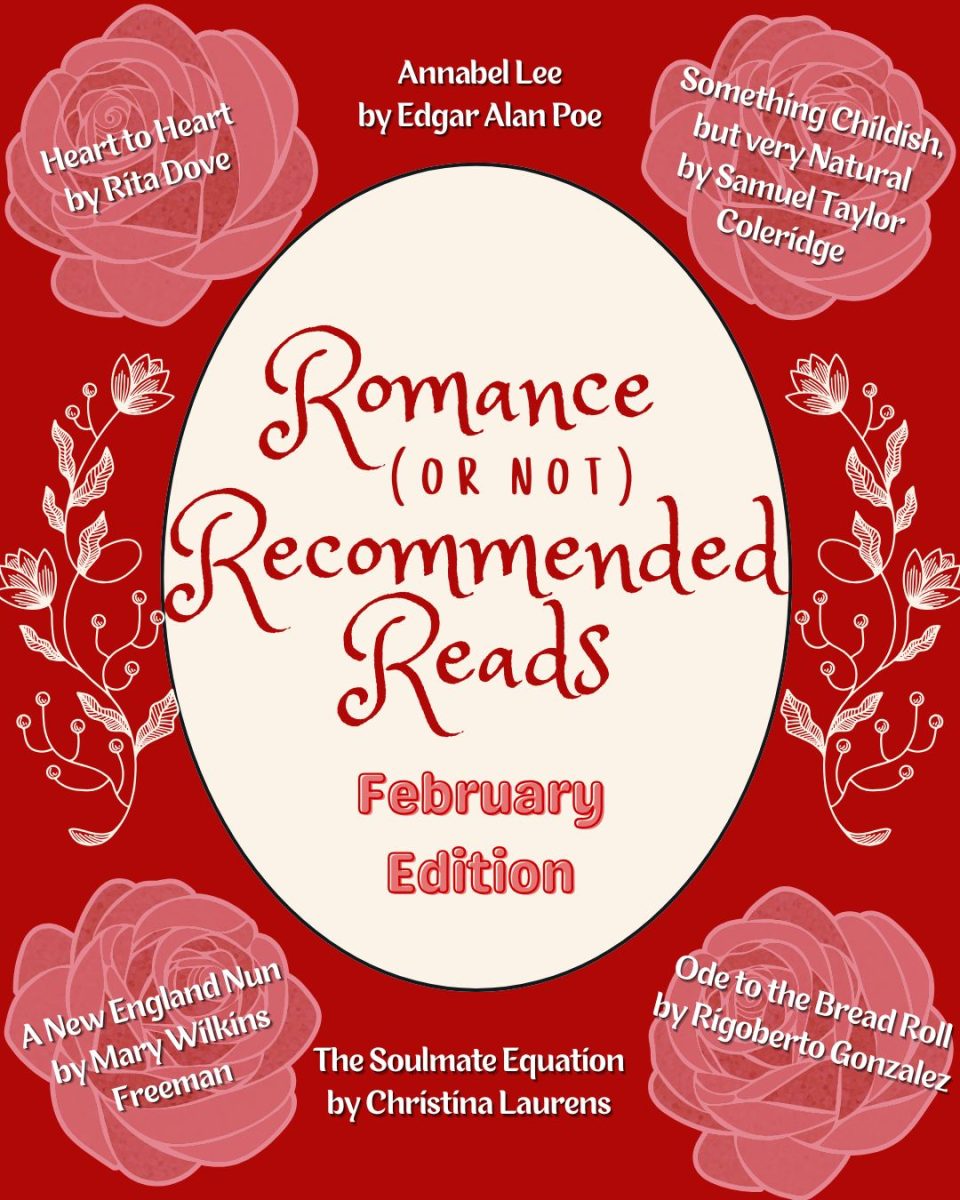
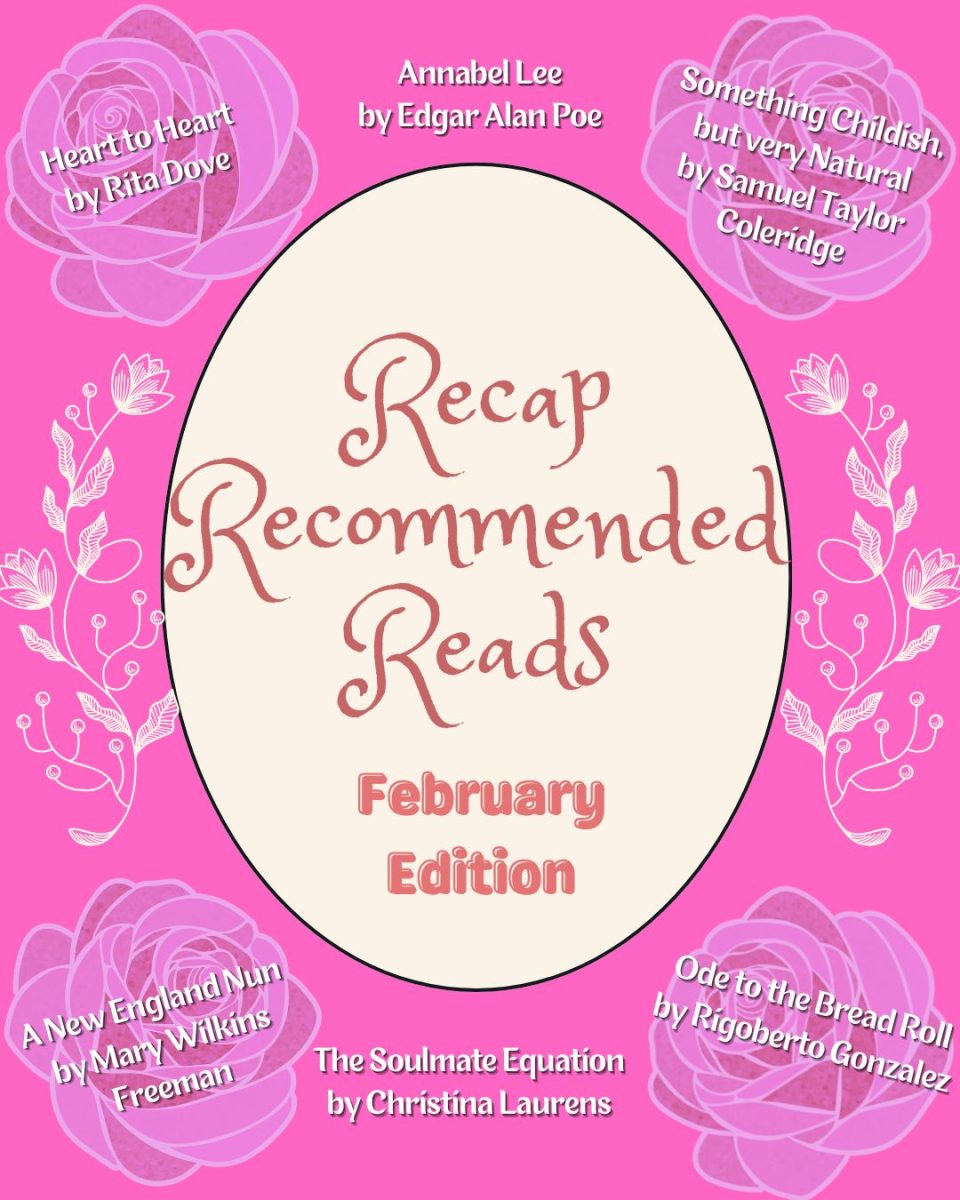
- The Soulmate Equation by Christina Laurens (novel)
- Something Childish but Very Natural by Samuel Taylor Coleridge (poem)
- “Heart to Heart” by Rita Dove (poem)
- “Ode to the Bread Roll” by Rigoberto Gonzalez (poem)
- “Annabel Lee” by Edgar Allan Poe (poem)
- “A New England Nun” by Mary Wilkins Freeman (short story)
Hello! Thank you so much for joining me in this recap of the romance (or not) texts that I recommended during the beginning of the semester!
In this recap, I will offer my interpretations, along with the reasons why I recommended these texts to you. For each listed selection, I will be revealing what happens and the meanings behind the texts that I interpret. So if you have not read these selections, but you still want to, please read them before you read this recap!
Also, please note that these are my opinions and interpretations. I do not expect anyone’s viewpoints to align exactly with mine, so readers are open to having a different analysis of each work listed.
The Soulmate Equation by Christina Lauren
“A part of River wanted to study this, to understand where this joy came from. But then, […] he simply let himself be what he always was when he was in the moment with Juno and Jess: perfectly, wholly, forever happy.”
First recap from the list is The Soulmate Equation, a romance novel by two authors: Christina Hobbs and Lauren Billings Luhrs (hence the combined name: Christina Lauren).
The novel surrounds itself with the situation of Jessica “Jess” Davis and Dr. River “Americano” Peña, a single mom of a 6-year-old and the founder of a company, respectively. As you may now know, ironically River is the founder of the company that does the matchmaking. And this shocking match is the highest the company has ever found.
As I mentioned when I introduced this novel, I stepped out of my comfort zone to read this, but it was worth it. This novel, to me, interestingly combined two separate spheres, those being romance and science. Emotions and genetic compatibility. The novel asks the questions: can true love and compatibility with someone be identified by the genes of someone else? Can we find our perfect match based on our genes? How would this affect society?
I’ve never particularly thought about this, much less the reactions and consequences of finding a perfect match. While the novel doesn’t actually offer a clear response to these questions, it does ask these questions, opening readers’ minds to these possibilities. It opens doors to “what ifs” and their consequences on individuals and communities, all within a romance novel.
When it comes to the romance aspect, I enjoy the novel because both River and Jess are unwilling due to their emotions, rather than have an unnatural force that separates them. This is especially true with Jess. After being left as an expecting mother, her own mother unwilling to step up as a parent, worries arise about her financial stability, and only having her grandparents for support, Jess is terrified of having to ask for help, of relying and opening herself up to someone new.
I really enjoyed how this isn’t too obvious to the readers until the point where she really needs someone. She battles with this fear and panic, but doesn’t really realize it, and to a certain extent, it’s a relatable feeling. She has so much on her mind that she forgets her own needs, forgets that people can help her, and that it isn’t selfish to need help. This is to the point where she doesn’t realize that this problem exists and persists until she begins to notice her feelings towards River. As soon as she does, she begins to accept her emotions towards River.
Jess finds acceptance and stability within herself and in her life. Juno (Jess’ child) finds her best friend who becomes her father. River finds the people he never thought he would so immensely. And finally, readers get to really think about the implications of merging love and science, two almost completely different spheres.
“Something Childish, but Very Natural” by Samuel Taylor Coleridge
“I’m always with you in my sleep!/ […] But then one wakes, and where am I?/ All, all alone.”
15 lines of heartwarming words that could very much apply to people today, even though it was written in Germany and written in the late 1700s and early 1800s.
This “childish” thing that Coleridge can be very likely interpreted in different ways, but I saw it as sleep or dreaming. The speaker in the poem wants to be with their love, and wants to take off if they had “two little wings”. The poem sets a dreamy, wondrous imagery of taking flight to wherever they please, which is revealed to be to the speakers’ “dear”. It honestly seems to reflect a long-distance relationship, where one would start to daydream about being together.
To make the poem more powerful is the interesting use of rhymes. Unlike the usual pattern of having a rhyme every two lines, this poem follows an uncommon pattern of rhyme. It invites readers to see within the speaker’s loneliness and find out why, exactly, it’s natural: because when you’re distanced from someone you love, you long for them, yearn for them to be near to the point of eventually finding solace in dreams.
“Heart to Heart” by Rita Dove
“Here,/ It’s all yours, now–/but you’ll have to take me,/too.”
This is the type of poem where (I think) you’d read it, then let it settle in you for a while before rereading. The short lines seem to cause readers (or at least me) to imagine a heartbeat. The poem seems to put a distinct line between what the heart feels like and what the heart actually feels, or the exterior qualities versus the interior emotions. The complexity between what the heart actually is (a muscle in the body necessary for survival) stripped down to find out what the heart can be (something that yearns, feels, loves).
It’s just such a deep poem that reflects common emotions for people who are hesitant yet yearning for someone. But by the end of the poem, you realize that they just lost heart (pun intended) and they resign themselves in offering their heart to the other person. It strips away the “veritable minefield of clichés” –as Rita Dove puts it in the American Academy of Poets website– “until all that remains is the true ‘heart’ of the matter: one human being, stripped of blather and artifice, speaking to the beloved.”
“Ode to the Bread Roll” by Rigoberto Gonzalez (Translated by Mahsa Hojjati)
“Nada más te pido, querido,/ que me recuerdes./ Y de recuerdo/ guardaré lo que me queda/ de boronas y costras.”
This poem is definitely not a simple poem about a bread roll. It’s about love and sensual desire and the feeling of loss all rolled (pun intended) into one poem. “Ode to the Bread Roll” seems to tell you, heartbreakingly, that “I love you strongly enough to let you go if you want to, and I appreciate the little you left behind.”
I can definitely see why Mahsa Hojjati felt worried about translating such a beautiful poem when he described his experience in “On Translating Rigoberto González”. The tone of the poem along with the long sentences only encourage the rhythm to flow in a way that only emphasizes the desire that the speaker feels.
One of the most interesting aspects of this poem is the culture elements. From marzipan to tamales to bolillo, the poem brings elements of Mexican culture not only to make the metaphors more interesting, but to bring something relatable and well-known to the poem. These foods create a sense of home to some people, particularly those with a Mexican background, and it provides a feeling of “you are not alone” or a sense of belonging to be able to really hit home.
“Annabel Lee” by Edgar Allan Poe
“For the moon never beams, without bringing me/ dreams/ Of the beautiful Annabel Lee;”
The storytelling tone, the vivid imagery, the unique perspective of the speakers’ haunting dreams of “the beautiful Annabel Lee”. The way it was before and the way it became after, both become a stark contrast that Poe manages to write so well within the poem.
One of the most attention-getting aspects of the poem is the use of rhyme, but no regular meter or consistent lines. Some lines end with dashes, some lines contain parenthesis, even an instance where an exclamation mark is used after the very first word in the line. There is not much consistency, yet the unfailing rhyme seems to lull the reader into a sense of security and healthy love.
Little do readers know that the speaker might be grieving to the point that they lie next to her tomb to feel close to her.
It’s a complicated poem, I’ll admit it. Either you swoon for the speaker’s eternal love for Annabel Lee, or you’re concerned for the speaker’s level of grief, or you simply enjoy this poem that takes advantage of the tone to express undying love for a deceased loved one. It’s a roller coaster of emotions. It’s the eloquent Edgar Allan Poe.
“A New England Nun” by Mary Wilkins Freeman
“She gazed ahead through a long reach of future days […] every one like the others, and all smooth and flawless and innocent, and her heart went up in thankfulness”
Louisa Ellis, an engaged woman living alone in her home, waiting loyally for fourteen years for her partner. Only to find out upon his return that he’s also in love with another woman, but is willing to sacrifice this love for her, and that she herself is in love with her home, but has spent fourteen years waiting. Louisa, loving her home immensely, breaks her engagement to allow Joe Dagget to be free to love another, and for herself to live alone in the peace and simplicity of her home.
Simplicity and peace. That was all she ever wanted. She was in love, but she was young and excited. Rather than abide by the norm. You’d think that a woman who is seen as different or weird to her society would be ashamed or ready to crawl into a hole and stay there out of embarrassment. But she didn’t. She breaks the boundaries on what it meant to be a woman in the late 1800s: from a compliant and obedient submissive, to a strong, highly independent and peaceful woman, living her life alone in her simple, humble home. If this woman could live alone and loved it, breaking a long-lasting engagement in the 1890s when society saw it as uncommon, is there any doubt that you can?
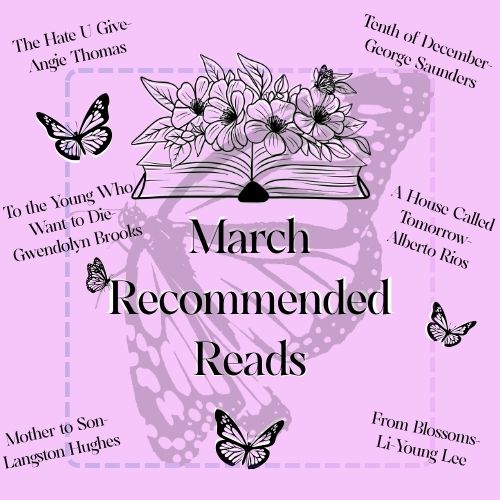
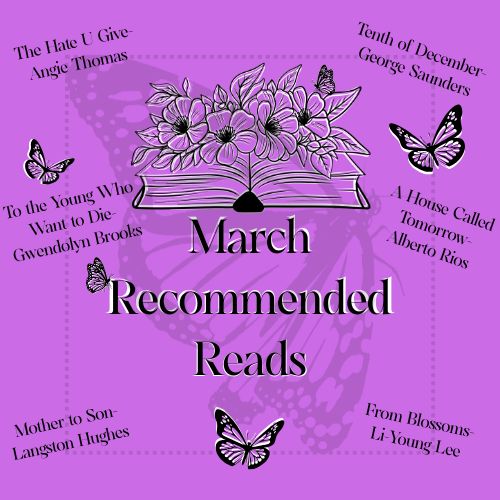
This concludes February’s edition of reading recommendations. I hope you enjoyed the readings as much as I did and hope you spread the word of how powerful these works are. Stay tuned for March’s motivational list coming soon!